Gatefold vs Sleeve Packaging: Cost Differences and When It’s Worth It
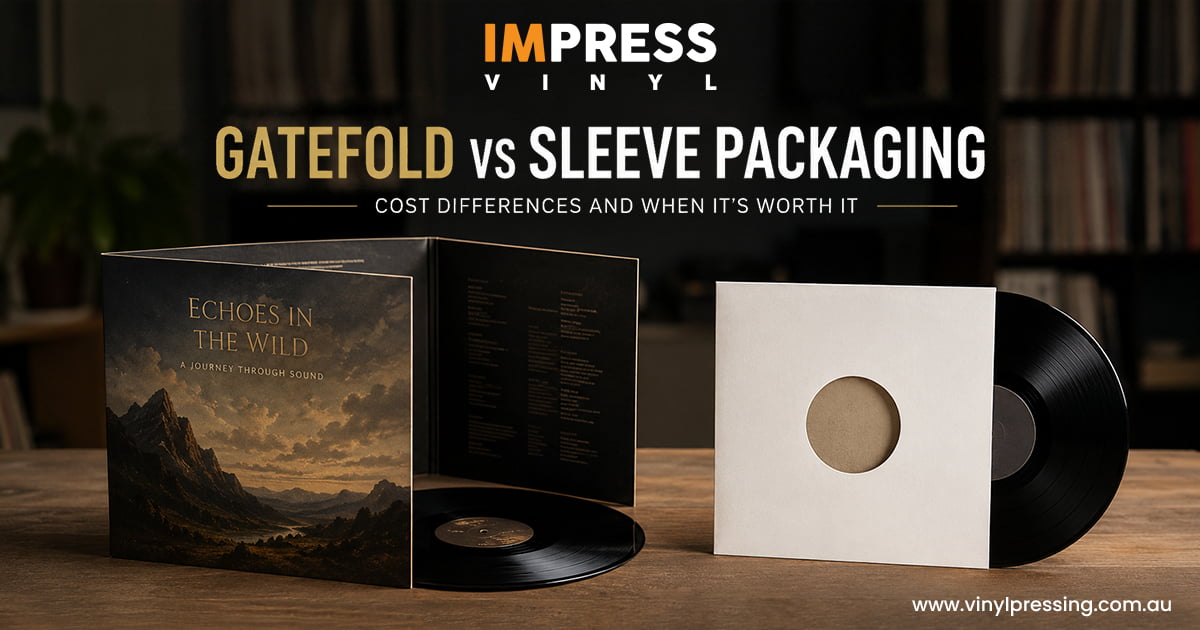
Pick up a gatefold record next to a plain single sleeve and you’ll feel the difference before you even read the sleeve notes. It’s heavier, it opens like a small book, and there’s just more of it. That extra bit of theatre is exactly why so many artists ask the same question when they’re pricing a pressing run: is gatefold vinyl packaging cost actually worth paying, or does a standard sleeve do the job just fine? Gatefold usually costs noticeably more than a standard sleeve, and whether that’s worth paying depends on what your record is trying to be. Let’s break down where that extra cost comes from and when it earns its keep.
What’s Actually Different Between Gatefold and Standard Sleeve Packaging?
A standard vinyl record sleeve is one panel, opens on one side, does its job without fuss. It’s the packaging most releases have used for decades, and there’s nothing wrong with that. A gatefold sleeve folds open like a hardcover book, which roughly doubles your printable space. Suddenly you’ve got room for extended artwork, lyric sheets, liner notes, credits, or whatever else the record calls for.
So when someone’s weighing up gatefold vs record sleeve, they’re not really comparing two boxes. They’re asking two questions at once: how much space does this release actually need, and how much of the budget makes sense to put into packaging rather than pressing.
Where Does the Extra Gatefold Cost Come From?
It’s not arbitrary. Gatefold uses more board, needs an extra folding and gluing step on the production line, and the print files get more complicated because you’re now designing for four panels instead of two. Between the finish you choose (matte, gloss, spot UV — take your pick), whether it’s a single or double LP, and your run size, gatefold pricing sits noticeably above standard sleeve pricing almost every time. The gap does shrink as quantities go up though, since setup costs spread across more units.
If you’re comparing gatefold vs vinyl sleeve quotes from different suppliers, make sure you’re comparing the same quantity tier. Pricing per unit can swing a lot between a small test batch and a full production run, and comparing mismatched volumes will give you a skewed picture of the real cost gap.
When Is Gatefold Packaging Worth the Extra Cost
There are a handful of situations where paying more for gatefold makes obvious sense.
Double LPs are the easiest case — when a release spans two records, gatefold isn’t just decoration, it’s genuinely practical. It houses both discs without needing a separate slipcase or sleeve. Concept albums and anything narrative-driven benefit too, simply because there’s more surface to tell the story across, whether that’s extended artwork, photography, or liner notes that wouldn’t fit on a single sleeve.
Then there’s the collector’s market. Fans buying vinyl as a keepsake, not just something to listen to, expect the packaging to reflect that. A cheap-feeling sleeve on a “limited edition” release undercuts the whole pitch. Crowdfunded or pre-order records fall into a similar category — people paid upfront, often before hearing a note, and gatefold gives them something physical to point to that says the wait was worth it.
In all of these cases, the extra spend on gatefold vinyl packaging cost tends to come back around, whether that’s in resale value, how the record photographs for socials, or just how it feels sitting in someone’s hands.
When Is a Standard Sleeve the Better Call?
Not every record needs the extra fold, and there’s no shame in that. If you’re working to a tight budget, releasing a single LP with fairly simple artwork, or testing the waters with a smaller first pressing, a standard vinyl record sleeve keeps costs predictable and doesn’t compromise on how the record sounds or looks on a shelf. Plenty of records people love — debut EPs, straightforward reissues, one-off singles — do just fine in a single sleeve. Packaging should match what the release actually is, not what you wish it looked like on Instagram.
Gatefold vs Sleeve: A Quick Comparison
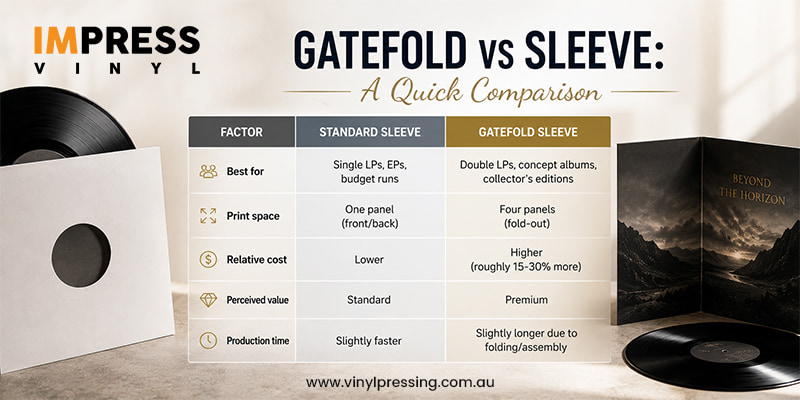
| Factor | Standard Sleeve | Gatefold Sleeve |
|---|---|---|
| Best for | Single LPs, EPs, budget runs | Double LPs, concept albums, collector’s editions |
| Print space | One panel (front/back) | Four panels (fold-out) |
| Relative cost | Lower | Higher (roughly 15-30% more) |
| Perceived value | Standard | Premium |
| Production time | Slightly faster | Slightly longer due to folding/assembly |
What Mistakes Do Artists Make When Choosing Gatefold vs Sleeve
Even people who’ve done a few pressing runs before get caught out here. A few patterns come up again and again.
Sometimes gatefold gets chosen for the wrong reason — it “feels more professional,” so it gets picked, but there’s no actual design needed for the extra panels, and half of them end up looking bare. Pricing comparisons go wrong too: comparing a gatefold quote at 100 units against a sleeve quote at 500 units tells you almost nothing useful, because unit costs move so much with volume. Turnaround gets underestimated more often than you’d think — that extra folding and assembly step adds time, and if it’s not built into the release schedule, it becomes a last-minute scramble. Artwork is another common snag; a layout designed for a single sleeve doesn’t just stretch to fit four gatefold panels, and figuring that out after files are already sent usually means a costly redo. And it’s worth remembering pressing cost and packaging cost don’t move together — a great deal on the pressing side says nothing about what the packaging will cost, so it pays to get both quoted separately rather than assuming.
Sorting these out with your pressing plant before anything goes to print is usually what separates a release that goes smoothly from one that gets delayed at the worst possible moment.
Which Is Right for Your Record: Gatefold or Standard Sleeve
At the end of the day, gatefold vs sleeve isn’t really a packaging question — it’s a question about what your album is and what you want people to feel when they hold it. This is the kind of call Impress Vinyl helps artists and labels make all the time. As one of the best places for vinyl record pressing in Australia, Impress Vinyl doesn’t stop at pressing the record itself — they also provide some of the best vinyl record packaging around, from clean standard sleeves through to fully custom gatefold builds, so the finished product looks and feels every bit as good as it sounds.