The Real Risks If You Skip the Vinyl Test Pressing
If you’ve ever priced out a vinyl run and wondered whether you could shave a step off the process, the test pressing is usually the first thing on the chopping block. It costs extra. It adds a week or two. And on paper, it looks skippable.
It isn’t. Skipping a vinyl test pressing is one of the most common ways a full run of records ends up in a landfill or worse, in the hands of fans who paid for something that doesn’t sound right.
Here’s what a test pressing actually protects you from, and why the importance of test pressing rarely gets the attention it deserves until something’s gone wrong.
What Is a Vinyl Test Pressing?
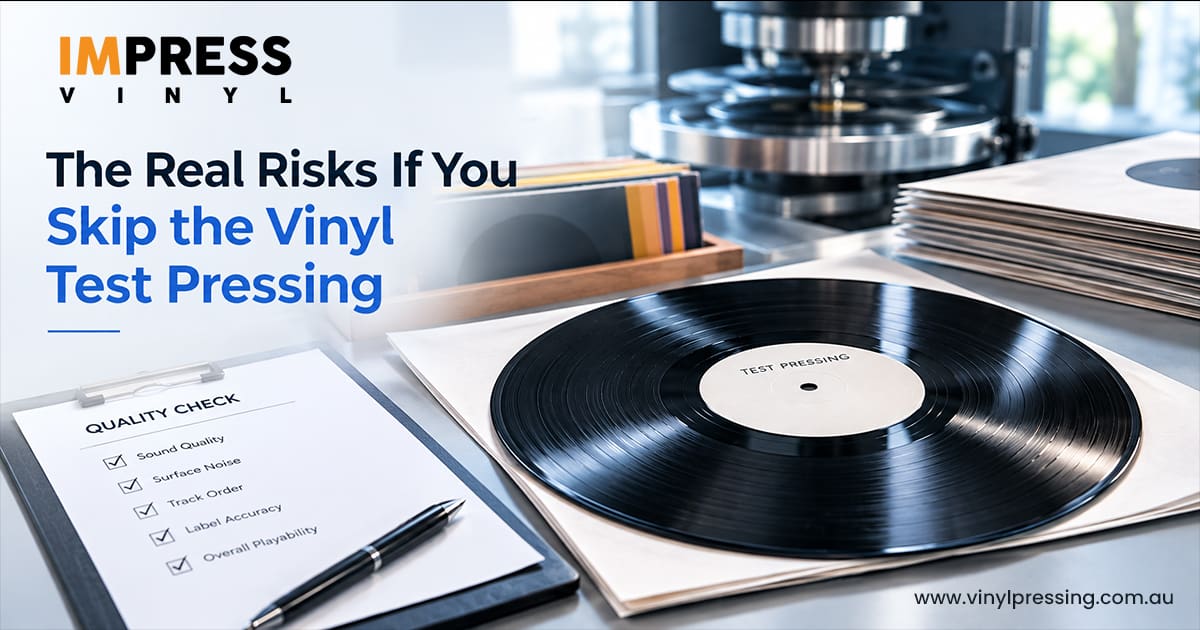
A vinyl test pressing is a small batch of records usually somewhere between one and ten copies pulled from the actual stampers that will be used for your full production run. It’s not a rough draft or a proof of concept. It’s the real thing, made with the real equipment, so you can hear precisely what your customers will hear before thousands of copies get pressed.
That distinction matters. A digital master can sound flawless and still translate poorly to vinyl. The lacquer-cutting and stamping process introduces variables that simply don’t exist in the digital domain.
Why Test Press Vinyl Records Before a Full Run?
Because vinyl is a physical, mechanical medium, and mechanical processes fail in ways digital files never do. Bands and labels test press vinyl records for the same reason a builder does a final walkthrough before handover: it’s the last chance to catch something wrong while it’s still cheap to fix.
The Real Vinyl Test Pressing Risks You’re Taking On
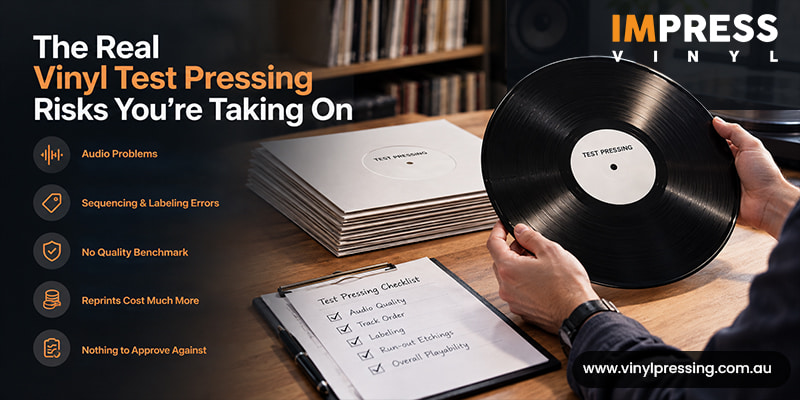
You won’t catch audio problems until it’s too late.
Surface noise, pops, skips, and warping can all originate in the mastering or plating stage rather than the pressing itself. Skip the check, and you find out when a customer emails about a scratch baked into every single copy.
Sequencing and labelling errors slip through.
It sounds basic, but mismatched run-out etchings, tracks pressed in the wrong order, or a Side A and Side B mix-up happen more often than most first-time pressers expect.
You lose your only real quality benchmark.
Every pressing plant has its own house sound and tolerances. Without a physical reference copy, you’re trusting the full run will match expectations with no proof either way.
Reprints cost far more than a test pressing ever would.
A test run typically runs a fraction of the price of a single test pressing. A full reprint, after a faulty batch has already shipped, means new plating, new production time, and often lost trust with the artist or label who ordered it.
You have nothing to approve against.
For labels and artists, a signed-off test pressing is a formal checkpoint proof both sides agreed the audio was correct before mass production began.
Test Pressing Before Full Production: Why the Order Matters
Running a test pressing before full production isn’t a bonus step tacked onto the timeline, it’s the checkpoint the rest of the process depends on. Once stampers are approved and a full run is underway, there’s no cost-effective way back. Everything upstream of that approval is cheap to fix. Everything downstream of it is not.
Why Are Test Pressings Important for Bands and Labels Specifically?
For independent artists and smaller labels, a bad pressing run isn’t just an inconvenience it can mean blown budgets, delayed release dates, and records that end up unsellable. This is the core of why test pressings are important: they give you the chance to catch problems while the fix still costs a phone call instead of a second production run.
Where Impress Vinyl Fits In
This is exactly why Impress Vinyl builds test pressings into every production timeline as standard practice, not an upsell. With over 20 years of pressing experience behind every run out of our Melbourne facility, we know the plants that skip this step are the ones fielding complaints six weeks after release. Impress Vinyl is one of the best places to get a vinyl test pressing done properly, because we treat it as part of quality control rather than paperwork every test press is reviewed against the original master before a single full copy gets stamped.
The Bottom Line
Skipping a test pressing might save you a week and a small fee upfront. But the risks of bad audio, sequencing errors, no quality benchmark, and the very real chance of a costly reprint almost always outweigh what you saved. If you’re planning a vinyl run, treat the test pressing as part of the production timeline, not an optional extra.