Picture Disc Vinyl: Is It the Right Choice for Your Next Release
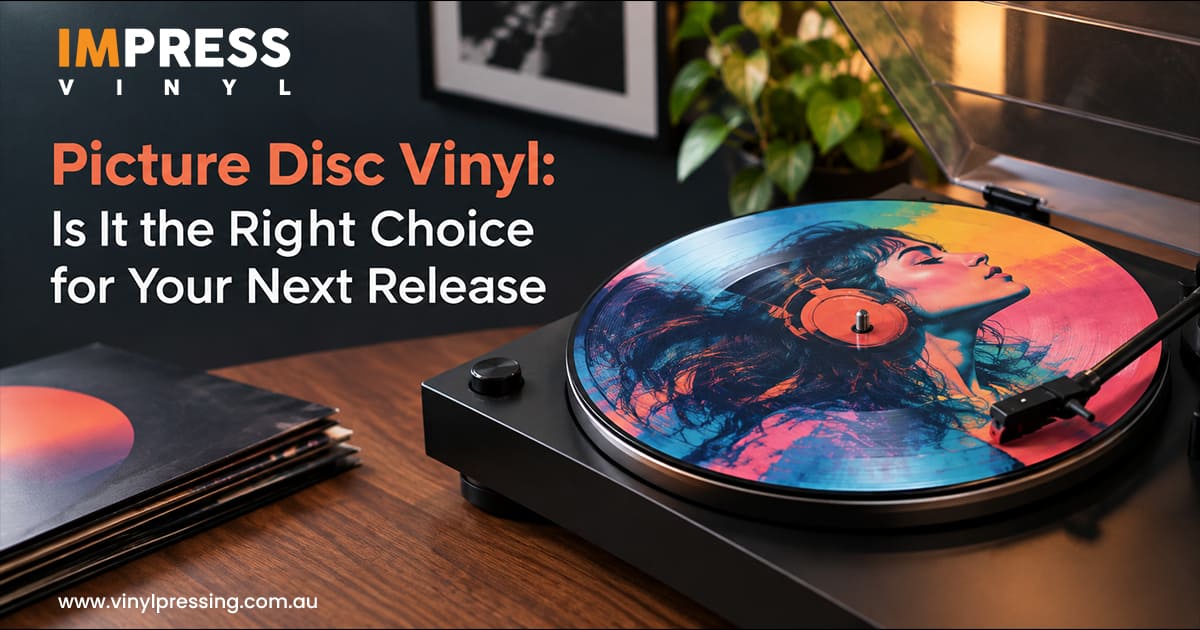
Walk past any decent record store and you’ll spot one from across the room — a picture disc vinyl sitting in the window, full-colour artwork spinning right there on the platter instead of hiding on a sleeve. It’s one of those formats that gets people picking up a record just to look at it, before they’ve even thought about buying it. But “looks great” and “right for your release” aren’t automatically the same thing, so let’s actually get into what these are and whether one makes sense for you.
What Is a Picture Disc Actually
Not a sticker on black vinyl, which is a common assumption. Picture disc records are made by taking a printed image on paper and pressing it between two clear vinyl layers, with the audio grooves cut straight through that sandwich. Both sides show the art. It plays like a normal record. The manufacturing is just genuinely more involved than a standard pressing, which is part of why the cost and turnaround differ too.
Do Picture Discs Sound as Good as Black Vinyl
Short answer: not quite, and any vinyl record pressing plant that tells you otherwise isn’t being straight with you. Because the grooves sit in a thinner vinyl layer wrapped around a printed image rather than solid PVC, picture vinyl records tend to carry a touch more surface noise and a slightly tighter dynamic range than heavyweight black vinyl.
Is that a dealbreaker? For most people, no. At normal listening volumes on a home setup, you’re unlikely to notice much. Mastering engineers and DJs chasing every last bit of headroom will still reach for standard vinyl – but for everyone else, the trade-off is small next to what you gain visually.
When Does a Picture Disc Actually Make Sense
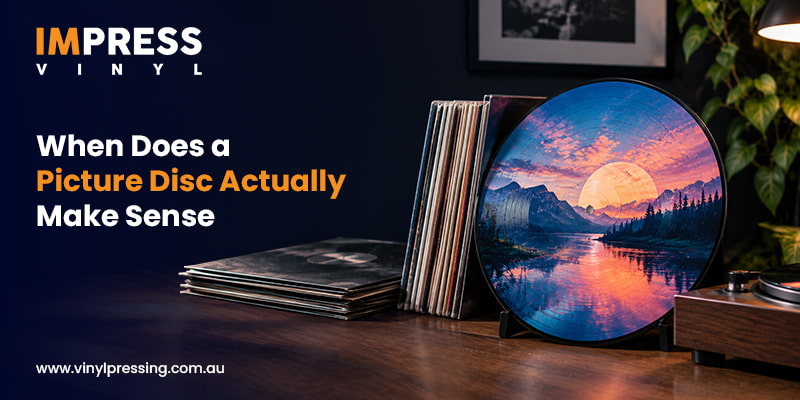
A few situations where picture disc vinyl records tend to earn their keep:
-
Limited or collector editions:
run alongside a standard black pressing so superfans get something extra without pricing out everyone else
-
Album art that’s part of the identity:
if the cover is doing a lot of work for the release, a picture disc puts it front and centre instead of tucked inside a sleeve
-
Reissues and anniversaries:
a picture disc variant often gets more press attention than another plain repress
-
Crowdfunding and pre-order tiers:
backers respond well to a reward that’s genuinely unique, not just a higher price point on the same product
Where it makes less sense: if your audience is DJs or listeners who care primarily about fidelity. In that case, stick with a well-mastered standard pressing and save the picture disc for a smaller bonus run.
How Do You Get the Artwork Right
This is where a lot of picture discs go wrong, and it’s rarely the pressing plant’s fault — it’s usually the source file. Low-resolution images, heavy gradients, and very dark artwork all tend to lose detail once they’re compressed into vinyl. A print-ready file needs to be higher resolution than most people expect, and dark or muddy designs almost always print with less punch than the artist pictured.
Impress Vinyl has spent years pressing picture discs and knows exactly where these files tend to fall apart before they turn into 500 discs nobody’s happy with. Based in Melbourne and working with bands and labels across Australia, Impress Vinyl is one of the more reliable places to get this format done properly – proofing the artwork upfront rather than finding out after the run’s already pressed.
Does Picture Disc Vinyl Need Special Packaging
A record designed to be looked at deserves packaging that doesn’t undercut it. Slide a picture disc into a bare paper sleeve and you’ve spent extra on the format only to hide most of the impact. Impress Vinyl also handles custom vinyl record packaging — printed inner sleeves, gatefold jackets, specialty finishes – so the disc and the packaging around it feel like they belong to the same product, not two separate afterthoughts.
Is Picture Disc Vinyl Worth It for Your Release
There’s no universal right answer here. Picture disc vinyl trades a bit of audio fidelity for something standard black vinyl can’t do: it turns the record itself into visible art. If your release leans on visuals, collectability, or fan engagement, it’s worth serious consideration — often as a limited variant alongside a standard pressing rather than a replacement for one. If pure sound quality is the priority, keep this format for a smaller bonus batch and let standard vinyl carry the main run.
Whichever way you land, bring your pressing plant into the conversation early. Format, artwork, and packaging decisions all affect each other, and getting them sorted together upfront is exactly the kind of thing a team like Impress Vinyl can walk you through.