How To Identify Fake Vinyl Records Before Buying
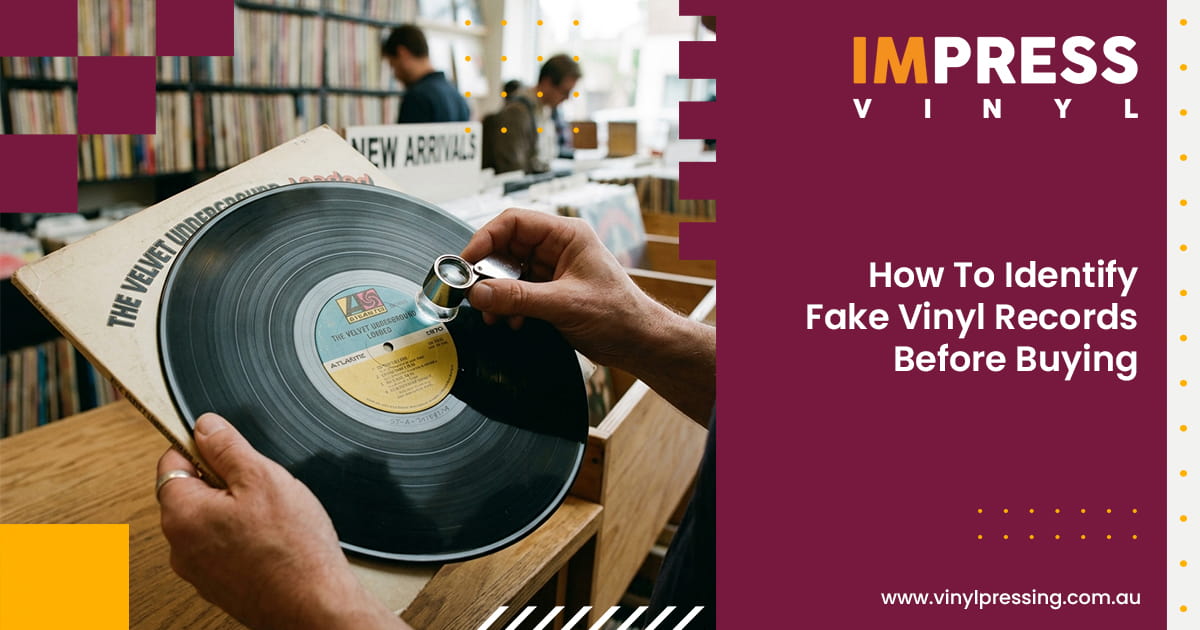
Have you ever questioned the authenticity of a vinyl record just before making a purchase and worried about investing your money in a counterfeit? With the growing demand for collectible vinyl, the market has experienced a significant rise in unauthorized pressings that closely imitate original releases.
This creates a serious concern for buyers who seek genuine records but lack the technical knowledge to verify authenticity. Counterfeit vinyl often includes subtle inconsistencies in packaging, labeling, print quality, and audio performance, details that can be easily overlooked.
The result is not only financial loss but also a compromised listening experience. For both seasoned collectors and new buyers, understanding how to identify fake vinyl records before purchasing is essential to ensure authenticity, protect your investment, and make confident, well-informed decisions.
Why Fake Vinyl Records Exist in the First Place
Before going through the ways through which the original and fake vinyl records can be identified and distinguished from each other, it would be wise to understand the reason behind the entry of fake vinyl records in the market.
The demand for vinyl records has grown significantly over the past decade, with collectors actively searching for rare and limited-edition pressings. Many vinyl record collectors are looking for rare and limited-edition records.
These items can be referred to as counterfeit vinyl records.
The problem with these items is that they do not offer the same sound quality or collectible value as a genuine item.
In order to make this clear, let’s examine this a little further.
A genuine vinyl record is produced with a certain level of expertise and quality in mind. A counterfeit vinyl record is produced in a way that does not offer the same sound fidelity.
Steps to Verify Vinyl Record Authenticity Before Buying
Start With the Packaging and Cover Art
The first way to differentiate a genuine item from a counterfeit one is to check the cover art.
A genuine item will have cover art with clear colors and quality print. A counterfeit item will often be slightly different when examined carefully.
For instance, if you’re purchasing a classic rock album from the 1970s, a genuine item will feature cover art with detailed graphics, clear text and sturdy cardboard construction.
If you examine the item carefully, you will realize that a counterfeit item will often feature dull colors or blurry print. Ask yourself: Does this item feature cover art that is professionally printed? Are the fonts clear and readable? Is the cardboard sturdy?
All these characteristics will help you differentiate a genuine item from a counterfeit item.
Collectors often compare the cover art with verified versions online in order to determine vinyl record pressing authenticity.
Examine the Record Label in the Center
Next, examine the label in the center of the record. This label contains important information such as the artist name, album title, track listing, and the record label logo.
Fake records usually show slight differences, such as unclear printing, unclear coloring, or an uncentered label.
For example, if you are purchasing a vintage jazz record, you might find that the logo of the record label appears distorted, while the text appears thicker than usual.
While this might not appear to be a critical factor, this information is crucial to a collector.
Examine the Matrix Numbers in the Runout Groove
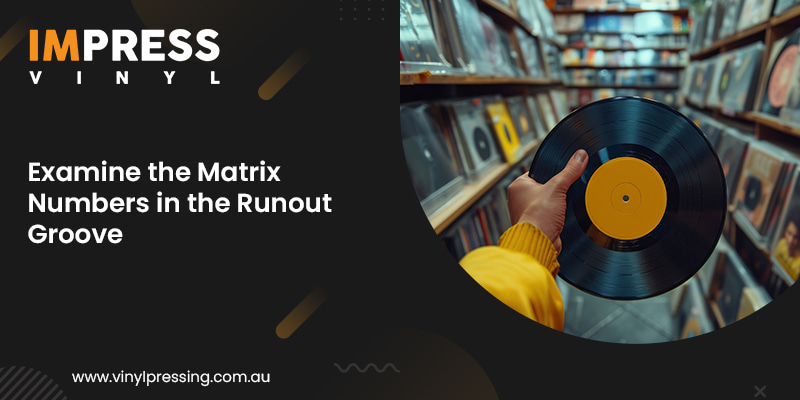
Another method of checking a record for authenticity is to examine the area between the last track on the record and the label.
Most genuine records contain Matrix Numbers, which are usually inscribed in this area.
If you hold the record at an angle, you might be able to see the Matrix Numbers.
Why are Matrix Numbers important? Matrix numbers are important because they are used to identify original vinyl records, as they are usually inscribed into the area between the last track on a record and the label.
A record might not be genuine if the Matrix Numbers are not clearly inscribed in this area.
For example, a collector might examine the Matrix Numbers to confirm whether a record is the original pressing.
If these codes do not match any known records, it may imply that it is not authentic.
Pay Attention to Sound Quality
What if all of these look perfect to your naked eye? What if you play it? Sound quality may also be another criterion to judge it by.
Authentic records are pressed from high-quality audio masters. The sound should be well-balanced, rich, and warm, which is perhaps another reason people prefer records to other audio equipment.
However, Counterfeit records are often pressed using low-quality digital or compressed audio sources. or compressed audio files, which may sound dull and of poor quality.
For instance, if you are listening to some of your favorite songs from your childhood and you find that the vocals sound dull or the instruments sound poor, it may indicate they were not produced properly.
Therefore, when you are checking your records, it is vital to ask yourself these questions: Are the sounds rich and clear, or are they dull and compressed?
Research the Seller Before Buying
Another factor to be considered is where you are buying your records from.
Well-known stores or online sellers are likely to have checked their products before selling them to you.
What if you are buying some of your favorite records from some unknown seller at throwaway prices? Therefore, it is obvious to wonder why it is so cheap.
Reliable sellers will provide detailed information such as pressing year, catalog number, grading and pictures. Transparency is generally a good indicator that the seller knows the collector’s market.
Compare With Verified Listings
Collectors use online vinyl record listings and communities where they record and verify the existence of many vinyl records. If in doubt about the record, try comparing the following:
- Label Design
- Catalog Number
- Cover Art
- Matrix Numbers
These details are compared to known records and are generally good indicators of the record’s authenticity.
This step is particularly important when purchasing rare and valuable records.
Watch for Suspiciously Perfect “Vintage” Records
Ironically, records that are too perfect can be red flags. Vintage records are generally in good condition but tend to show signs of aging such as slight wear on the cover and slight discoloration on the paper label.
If the seller claims the record has been in storage for 40 years in perfect condition with no explanation, it is best to be wary.
While it is possible for a record to be in near-mint condition, such records are generally well documented and well known within the community. Thus, the logical question is: Does the record’s condition match its age?
Learn From the Vinyl Collector Community
One of the best sources for information on records is the global community of vinyl record collectors.
Discussion boards and record fairs are filled with talk of pressing errors, bootlegs and other questionable records.
Many collectors are more than happy to share their experiences with problematic records and warn others about false advertising.
If you are ever in doubt about the record in your hands, there is a good chance that someone else in the community has had the same experience. This helps the community as a whole protect itself from false records.
Final Thoughts
Collecting vinyl records is more than just collecting music; it is collecting history, preserving sound and enjoying the physicality of the music.
However, as the popularity of vinyl records continues to increase, so does the threat of counterfeit products.
With the right education and tools at your disposal, you can avoid many mistakes and protect your collection and your investment.
The next time you are browsing through the records and find the record you’ve been looking for all this time, take a second and ask yourself:
Does everything about this record look and feel legitimate? It is the small details that can sometimes make all the difference between a great addition to your collection and a disappointing purchase. Want to ensure every vinyl record you buy or produce meets the highest standards? We at Impress Vinyl deliver trusted solutions for authentic, high-quality vinyl production and verification.